

Get to Know Us
We are a high school club founded in 2022 at the Minhang Crosspoint Acadamy, focusing on animals, especially those that aren't considered "regular pets". We believe that humans are still not perfect as a species, and we should learn from all living things to improve ourselves, both physically and mentally. In the past, we have expanded our research into reptiles, amphibians, insects, and many more invertebrates and vertebrates. Learning about their physiology, habitats, paths of evolution, and social structures.
Animal Observation Log
Dedication. Expertise. Passion.
From beetles and reptiles to birds, amphibians, and aquatic life, my twelve years of animal care have been a continuous education in biology, empathy, and observation. Each species revealed a different facet of life’s complexity—resilience, intelligence, vulnerability, or interdependence. Together, they formed a living curriculum that shaped both my scientific curiosity and my ethical compass.
This portfolio is not merely a record of the animals I have nurtured, but a reflection of the evolution of my understanding—of how to see, to listen, and to coexist with every form of life entrusted to my care.

Lizards (Bearded Dragons, Water Dragons, Monitors, Tegus)
Reptiles entered my care when I was ten, marking a decisive shift from curiosity to structured animal management. I began with bearded dragons (Pogona vitticeps), before expanding to include Asian water dragons (Physignathus cocincinus), Argentine tegus (Salvator merianae), and several monitor lizards. Together, these species formed the foundation of my long-term exploration into thermoregulation, cognition, and behavior in reptiles.
Each enclosure was a microcosm—custom-built to replicate the animals’ ecological niches. Heat lamps created a basking gradient ranging from 30°C to 40°C, UVB bulbs simulated natural sunlight cycles, and misting systems preserved humidity for tropical species. I closely monitored basking durations, appetite changes, and shedding patterns, correlating these data with metabolic health.
The bearded dragons exhibited docility and predictable basking behavior, providing an ideal baseline for behavioral conditioning studies. The tegus, by contrast, revealed striking cognitive plasticity—recognizing feeding times, responding to auditory cues, and even learning to associate specific gestures with food rewards. The monitors displayed a different kind of intelligence: spatial memory and territorial assertion. They could distinguish familiar handlers from strangers, demonstrating the nuanced awareness often overlooked in reptiles.
Daily interaction was key. Through consistent handling and environmental enrichment, I observed a reduction in defensive behaviors and an increase in voluntary approach. These experiences taught me that animal care, at its best, depends not on dominance but mutual recognition—a relationship of quiet understanding between keeper and creature.

Beetles (Chalcosoma, Dynastes, Megasoma)
My earliest experience in animal care began with rhinoceros beetles—specifically species from the Chalcosoma, Dynastes, and Megasoma genera. I was captivated by their sculptural beauty: the metallic reflections of their exoskeletons, the intricate horn structures of males, and the silent strength with which they moved through their environment. What began as a childhood fascination gradually evolved into a small-scale entomological breeding and observation program, spanning over five years.
In my home setup, I maintained breeding colonies under strictly controlled environmental conditions—temperatures between 25–28°C and humidity levels of 75–85%. I experimented with different substrate compositions, learning that Chalcosoma atlas larvae preferred fine-decayed leaf litter while Dynastes hercules thrived in coarse oak matter. I meticulously recorded developmental timelines from larval hatching to pupation, noting variations in instar duration, feeding behavior, and cocoon formation among the species.
Over time, I became attuned to the subtle physiological cues that signal transition phases. The larvae’s gradual cessation of feeding, their stillness before pupation, and the texture changes in their casing all became deeply familiar signs. I successfully oversaw numerous pupation cycles, improving survival rates through careful moisture and temperature adjustments.
Beyond their biology, these beetles taught me about ecological patience—how entire lifecycles unfold invisibly, underground, before revealing brief, brilliant adulthood.
Their metamorphosis impressed upon me the complexity of natural systems and became my earliest lesson in respecting the unseen labor of life.
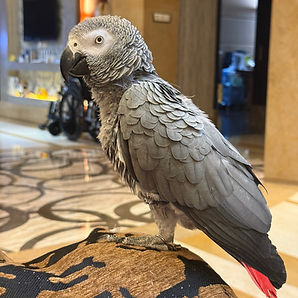
Birds (Parrots, African Grey, Common Parakeet)
Working with birds, particularly parrots, deepened my understanding of intelligence beyond language. My first African grey (Psittacus erithacus) was both a teacher and companion—her mimicry was not mere repetition, but a reflection of mood, timing, and attention. I began to realize that parrots do not imitate for novelty; they communicate to connect.
To support their psychological welfare, I designed an enriched aviary system combining visual, auditory, and tactile stimulation. I incorporated foraging puzzles, mirror communication setups, and rotating vocalization sessions using recorded environmental sounds. Each interaction was documented—patterns of call and response, tone variation, and emotional states. The African greys were particularly sensitive to human presence, altering vocal pitch to mirror conversational rhythm.
Parakeets, on the other hand, taught me about social intelligence within a group structure. Their synchronized perching, communal grooming, and chorus-like chatter were all indicators of group harmony. Disruptions—such as a new member or environmental change—would immediately alter vocal frequency and spacing patterns, serving as natural stress indicators.
Through these birds, I came to appreciate that emotional health in animals is inseparable from environmental complexity. They showed me that care must include not just food and shelter, but psychological stimulation, choice, and companionship.

Chicken (Vietnamese Game Fowl)
During the COVID-19 pandemic, when daily life slowed and isolation deepened, I turned my focus to Vietnamese game fowl (Gallus gallus domesticus). Using a temperature-regulated incubator, I successfully hatched several clutches, tracking embryonic development with precision.
Throughout incubation, I maintained temperature at 37.8°C and humidity at 55%, adjusting during pipping to promote shell softening. The first chick hatched after 20 days—tiny, trembling, yet instinctively alert. Over the following months, I documented growth metrics, feather molting stages, and hierarchical behavior as they matured.
Game fowl possess a fascinating blend of aggression and sensitivity. Despite their reputation for assertiveness, the chicks imprinted quickly, following me as though I were part of their brood. Their early morning calls became a rhythm to my days, their personalities as distinct as their plumage.
Through observing them, I reflected on the intersections of nature and nurture—how environmental conditions and human care can temper instinct without erasing identity. Raising these birds during a global crisis offered both companionship and insight into resilience under constraint.

Crabs (Freshwater River Crabs)
My work with freshwater river crabs began as an experiment in microhabitat reconstruction but soon evolved into a detailed study of molting physiology. Crabs are deceptively delicate creatures—each molt represents both renewal and risk.
I constructed mixed-substrate enclosures combining sand, gravel, and clay for burrowing, maintaining pH levels around 7.0–7.5 and a water temperature of 25°C. As individuals approached molt, I noted consistent pre-molt indicators: decreased feeding, increased substrate disturbance, and a dulled carapace coloration. By adjusting calcium and trace mineral concentrations, I significantly improved post-molt survival rates.
The process was mesmerizing—the old exoskeleton splitting along hidden seams, the new shell soft and translucent, hardening with each passing hour. These events offered rare insight into biochemical regeneration, reminding me that even the smallest organisms embody resilience and transformation.

Fish (Reef Fish, Snakeheads, Catfish, Betta Fish)
My experience with aquatic species has been among the most technical aspects of my work, combining ecology, chemistry, and behavioral observation. Over the years, I managed tanks for reef fish, snakeheads (Channa spp.), catfish, and bettas (Betta splendens), each requiring precise environmental calibration.
For reef systems, I maintained salinity at 1.024 specific gravity, regulated nitrate cycles, and used live rock filtration to simulate coral ecosystems. Observing symbiotic relationships—particularly between clownfish and anemones—taught me how fragile marine balance truly is. In contrast, snakeheads required isolation and dense cover; they were aggressive ambush predators whose air-breathing physiology demanded both open surface access and submerged shelter.
Catfish served as natural scavengers within community tanks, playing a stabilizing role in ecosystem maintenance. Their nocturnal feeding cycles taught me to design mixed-tank environments that respected circadian diversity. Betta fish, meanwhile, revealed an entirely different kind of intelligence. I observed male courtship displays, bubble nest construction, and flare rituals, documenting behavioral triggers linked to mirror exposure and tank layout.
These aquaria became living laboratories—each glass wall reflecting not confinement, but complexity. Managing them required both precision and intuition: chemistry balanced by empathy.

Turtles and Tortoises (Freshwater, Softshell, Pig-nosed, Aldabrachelys gigantea)
Over more than a decade, I have maintained and studied multiple species of freshwater turtles, softshell turtles (Pelodiscus sinensis), pig-nosed turtles (Carettochelys insculpta), and the Aldabra giant tortoise (Aldabrachelys gigantea). Together, they provided a comprehensive view of reptilian diversity and environmental sensitivity.
Each species required a finely tuned habitat: softshell turtles thrived in sandy-bottom tanks with shallow basking platforms; pig-nosed turtles needed filtered, current-regulated water systems; the Aldabra tortoise demanded terrestrial enclosures with UV exposure and calcium-rich diets. I maintained detailed logs correlating basking behavior, feeding response, and shell growth with seasonal variations in light cycles.
Through prolonged observation, I discovered how minor changes—humidity shifts, substrate depth, even the presence of natural light—affected respiration and appetite. The Aldabra tortoise, gentle and deliberate, became a daily reminder of the virtue of slowness; its manner of living seemed to embody time itself. These reptiles taught me that good care is an act of precision, consistency, and reverence for natural rhythm.

Frogs (Horned, African Bullfrog, Tree Frogs)
Amphibians presented a unique challenge, bridging the aquatic and terrestrial worlds. My collection included horned frogs (Ceratophrys cranwelli), African bullfrogs (Pyxicephalus adspersus), and several species of arboreal tree frogs.
Horned frogs fascinated me with their ambush predation tactics—buried in substrate, motionless for hours, capable of explosive movement when triggered. They entered aestivation during dry conditions, cocooning themselves in a thin epidermal layer to retain moisture, which I replicated through controlled humidity fluctuations. The African bullfrogsdemonstrated the opposite: robust, vocal, and territorial, displaying remarkable parental instincts and responsiveness to stimuli.
Tree frogs introduced an entirely different dynamic. Their vertical enclosures required intricate humidity and misting systems, replicating canopy microclimates. I learned to track nocturnal activity cycles using infrared observation, noting shifts in feeding and mating behavior tied to light intensity.
Through these amphibians, I deepened my understanding of osmoregulation, skin respiration, and environmental stress physiology, refining every husbandry variable to meet their precise needs.


1. Animal Fosterage Program
Description:
This service allows students and faculty to temporarily foster exotic animals from the club under expert supervision. Participants will have the unique opportunity to care for reptiles, amphibians, and arthropods in a controlled environment while learning about their biology, behavior, and habitat requirements. Each foster family will receive a care guide tailored to the species, covering diet, temperature, humidity control, and handling practices.
Goals:
-
Encourage hands-on experience with less common animals.
-
Teach responsibility in caring for exotic species.
-
Help club members and participants understand animal behavior, improving future research.
How It Works:
-
Interested participants will undergo a short training workshop on handling and caring for specific animals.
-
The club will supply all necessary materials, including terrariums, heat lamps, and food.
-
Weekly check-ins will ensure that both the animals and foster families are thriving.
Expected Impact:
This service will deepen empathy for exotic species while expanding participants' knowledge of their unique behaviors. Additionally, fostering helps dispel fears or misconceptions about these animals by encouraging positive, respectful interactions.

2. Raising Public Awareness: Exhibitions, Seminars, and Presentations
Description:
This service aims to educate the broader school community and the public about exotic animals through exhibitions, seminars, and interactive presentations. The focus will be on raising awareness about the important ecological roles of reptiles, amphibians, and arthropods, as well as correcting common myths that portray these creatures as "scary" or harmful.
Key Events:
-
Exhibitions: The club will host periodic exhibitions where visitors can observe a variety of exotic animals. Interactive displays and informative panels will highlight their behaviors, habitats, and ecological significance.
-
Seminars and Presentations: Club members will organize seminars to discuss research findings on specific species or broader topics such as conservation, biodiversity, and exotic animal behavior. Special guest speakers, including herpetologists and entomologists, can be invited to provide expert insights.
-
Public Outreach Booths: During school-wide events or fairs, the club can set up booths with live demonstrations, including safe animal handling sessions, to promote understanding and reduce fear surrounding these exotic species.
Goals:
-
Shift the perception of exotic animals from "dangerous" to fascinating and valuable.
-
Highlight the roles these species play in ecosystems and their conservation importance.
-
Provide students with public speaking and research presentation skills.
Expected Impact:
By educating peers and the public, the club will promote a deeper understanding of exotic animals, potentially sparking interest in biology, conservation, or even exotic pet care. These efforts can also demystify creatures like snakes and tarantulas, helping to break the stigma surrounding them.

3. Exotic Animal Medication and Surgery Service
Description:
This service aims to provide basic medical care, including minor surgeries, for exotic animals such as reptiles, amphibians, and arthropods. Club members will work with licensed veterinarians or vet students to learn the fundamentals of exotic animal healthcare. The service will focus on both in-club animals and those brought in by students or local pet owners.
Goals:
-
Train club members in basic veterinary care for exotic species.
-
Improve the overall health and well-being of the club's animals through regular medical check-ups and procedures.
-
Serve as an educational opportunity for students interested in pursuing careers in veterinary medicine.
How It Works:
Workshops: Veterinarians or local veterinary schools will host workshops for club members, covering essential topics like injury assessment, wound care, administering medication, and minor surgical procedures.
Vet Partnerships: Collaborating with local vets, the club will offer periodic medical check-ups for the exotic pets of students and faculty.
On-Site Care: The club’s own animals will receive regular health assessments, ensuring they are well cared for, and in cases of injury or illness, minor surgeries will be conducted by trained professionals with club members observing.
Expected Impact:
This service will provide a hands-on learning opportunity for students while also ensuring that the exotic animals are properly cared for. It could also attract more students interested in veterinary science, particularly in the growing field of exotic animal care. Additionally, offering medical care to local exotic pet owners can help establish the club as a trusted resource in the community.
View Gallery
There may be no better way to communicate what we do than through images. As you browse our site, take a few moments to let your eyes linger here, and see if you can get a feel for our signature touch.


